In today’s fast-paced world, where information is readily available at our fingertips, it’s easy to assume that economic data paints a clear and accurate picture of the state of the economy. However, the reality is far more complex. Economic data, while valuable, does not always tell the full story. In this article, we will delve into why economic data can be misleading and how a deeper analysis is necessary to truly understand the economic landscape.
The Limitations of GDP
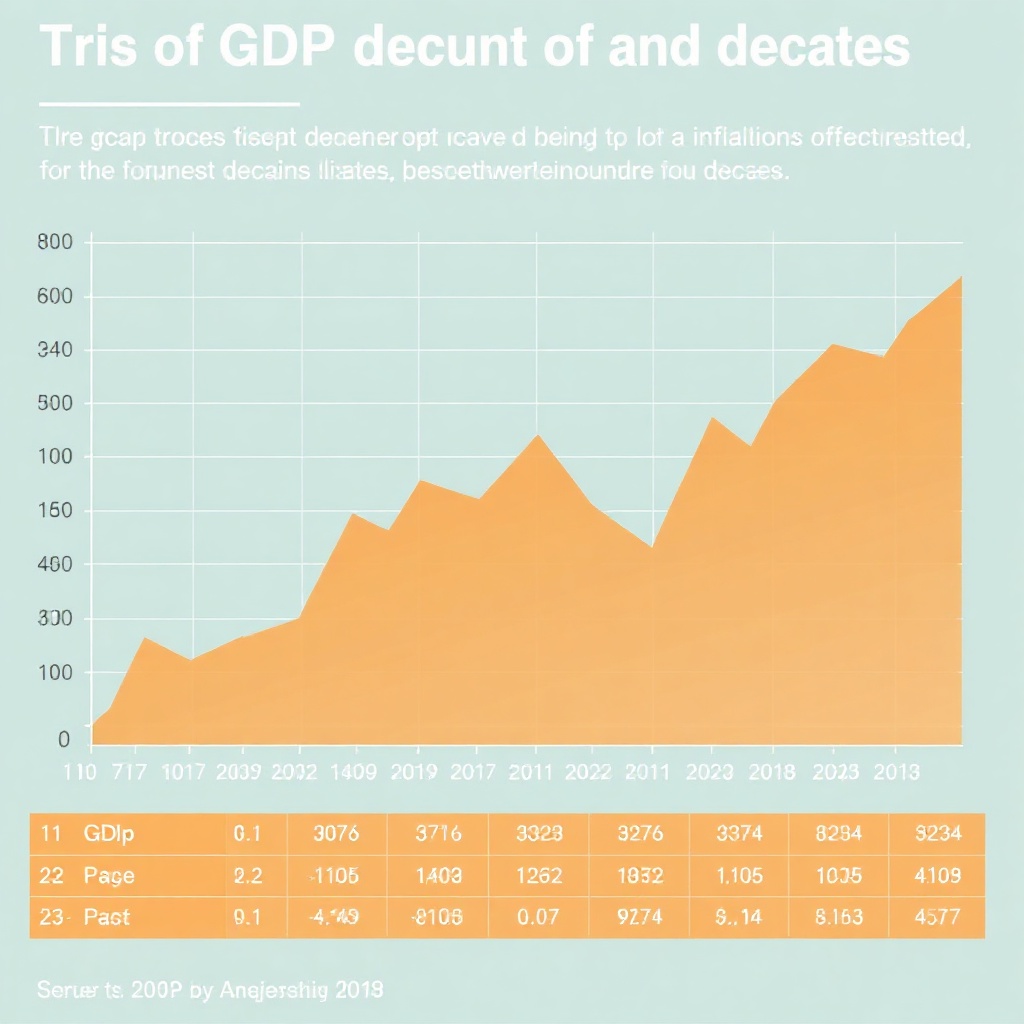
Gross Domestic Product (GDP) is often used as a key indicator of economic health. However, GDP has its limitations. It fails to account for factors such as income inequality, environmental degradation, and the informal economy. As a result, relying solely on GDP can give a distorted view of a country’s overall well-being.
Unemployment Rates vs Underemployment Rates
While low unemployment rates are generally seen as a positive sign, they don’t always reflect the full reality of the job market. Underemployment, where workers are overqualified or working part-time involuntarily, is a growing concern. Ignoring underemployment can lead to an incomplete assessment of the labor market.
Inflation and Cost of Living Discrepancies
Inflation is a key economic indicator that measures the rate at which prices for goods and services rise. However, it doesn’t always capture the full extent of the cost of living. Certain expenses, such as housing and healthcare, can inflate at a much faster rate than the overall inflation rate, impacting households disproportionately.
The Impact of Globalization
In a globalized world, economic data can be influenced by factors outside of a country’s control. Trade agreements, currency fluctuations, and global supply chains all play a role in shaping economic outcomes. Failing to consider the broader global context can lead to an incomplete understanding of economic trends.
Technological Disruption and Job Displacement
The rise of automation and artificial intelligence is transforming industries and reshaping the labor market. Economic data may not accurately reflect the impact of technological disruption on job displacement and income inequality. A more nuanced analysis is needed to account for these shifting dynamics.
Socioeconomic Disparities and Wealth Inequality
Economic data often overlooks the disparities that exist within society. Wealth inequality, racial disparities, and access to education and healthcare are all critical factors that can be obscured by aggregate economic indicators. Addressing these disparities requires a more comprehensive approach to analyzing economic data.
The Role of Behavioral Economics
Traditional economic models assume rational behavior, but human decision-making is often influenced by emotions, biases, and social factors. Behavioral economics sheds light on the limitations of purely data-driven analyses and emphasizes the importance of understanding human behavior in economic decision-making.
In conclusion, while economic data provides valuable insights into the state of the economy, it is essential to recognize its limitations. A more holistic and nuanced approach to economic analysis is necessary to fully understand the complexities of the modern economic landscape. By going beyond the numbers and considering the broader social, environmental, and technological factors at play, we can gain a more comprehensive understanding of the economy.