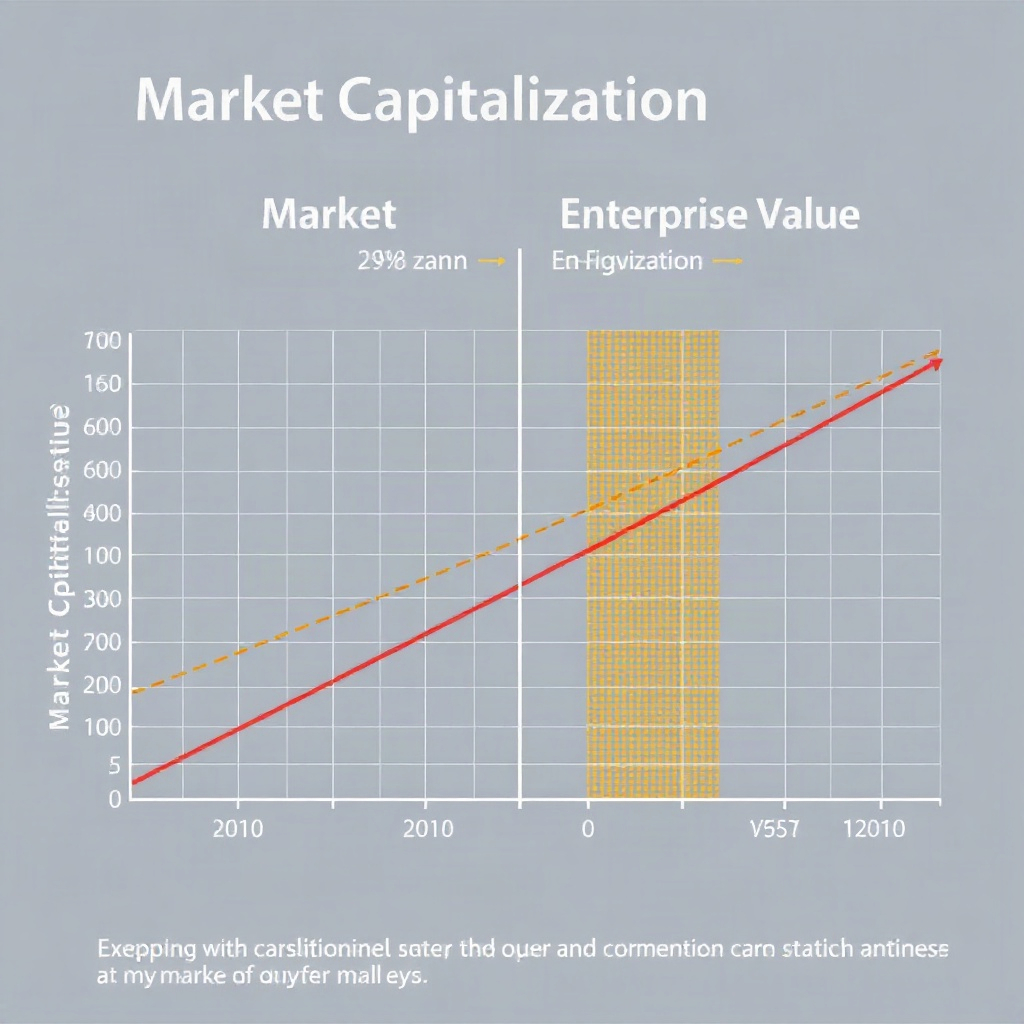
In the world of stock investing, understanding the difference between market capitalization and enterprise value is crucial for making informed decisions. Both metrics play a key role in evaluating a company’s worth and potential for growth. In this article, we will delve into a clear comparison of market capitalization vs enterprise value, providing stock investors with valuable insights to enhance their investment strategies.
Market Capitalization The Basics
Market capitalization, often referred to as market cap, is a simple yet powerful metric that represents the total value of a company’s outstanding shares of stock. It is calculated by multiplying the current stock price by the total number of outstanding shares. Market capitalization gives investors an idea of a company’s size in the stock market and is widely used to compare companies within the same industry.
Enterprise Value Going Beyond Market Cap
While market capitalization is a useful metric, it does not provide a comprehensive view of a company’s overall value. This is where enterprise value comes into play. Enterprise value takes into account not only the market value of a company’s equity but also its debt, cash, and other financial obligations. By including these factors, enterprise value provides a more accurate representation of a company’s total value and is often used in more sophisticated financial analyses.
Key Differences Between Market Cap and Enterprise Value
Understanding the differences between market capitalization and enterprise value is essential for stock investors. Market cap represents the market value of a company’s equity, while enterprise value takes into consideration the company’s debt and other financial components. Market cap is a more straightforward metric, while enterprise value provides a more holistic view of a company’s financial health.
Importance of Using Both Metrics
While market capitalization is a widely used metric in the stock market, it is important for investors to also consider enterprise value when evaluating investment opportunities. By looking at both metrics, investors can gain a more comprehensive understanding of a company’s value and make more informed decisions. Using market capitalization and enterprise value together can provide a more complete picture of a company’s financial position.
Case Studies Applying Market Cap and Enterprise Value
To illustrate the importance of using both market capitalization and enterprise value, let’s consider two hypothetical companies in the same industry. Company A has a high market capitalization due to investor optimism, but also carries a significant amount of debt. On the other hand, Company B has a lower market capitalization but a stronger balance sheet with substantial cash reserves. By comparing the market cap and enterprise value of these two companies, investors can make more nuanced investment decisions.
Conclusion Balancing Market Cap and Enterprise Value
In conclusion, market capitalization and enterprise value are both valuable metrics for stock investors. While market cap provides a quick snapshot of a company’s size in the stock market, enterprise value offers a more comprehensive view of its total value. By using both metrics in conjunction, investors can enhance their investment strategies and make more informed decisions in the dynamic world of stock investing.