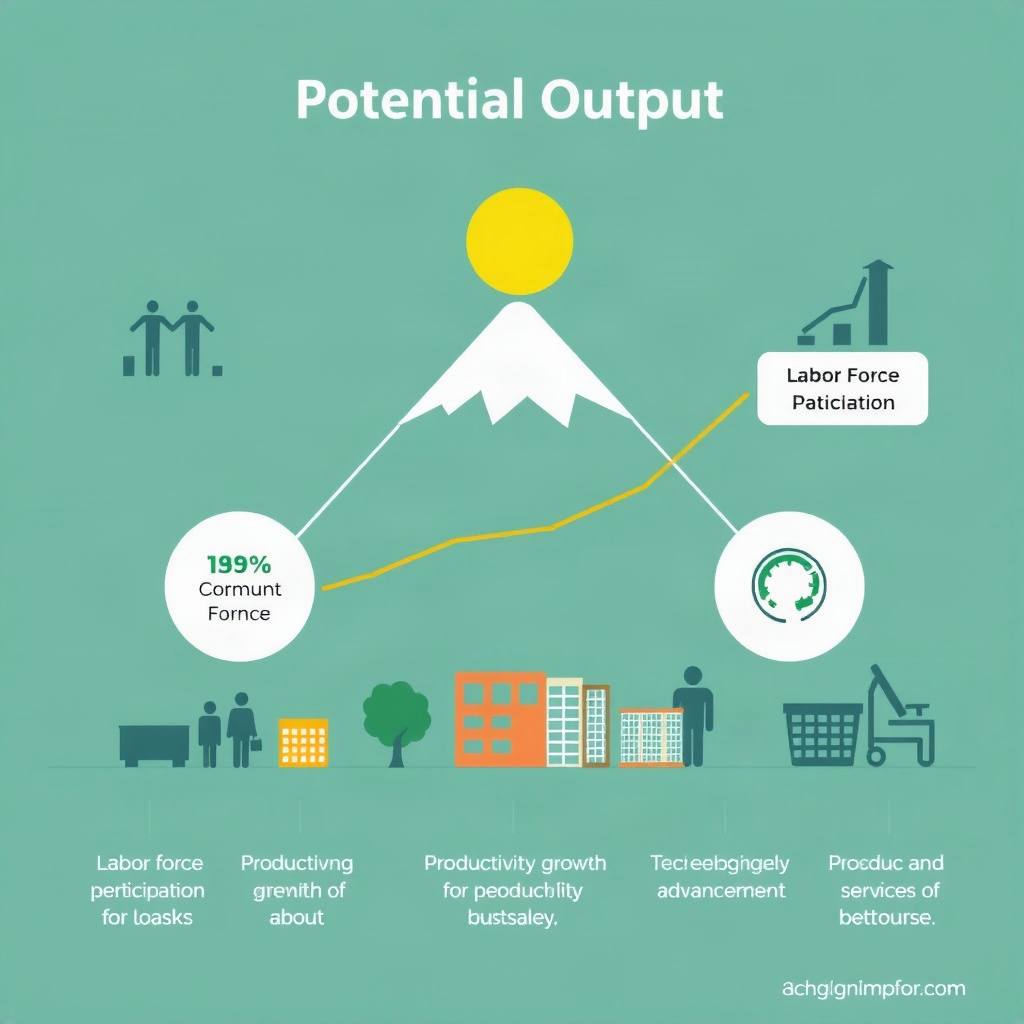
Potential output is a key concept in economics that refers to the maximum sustainable level of production that an economy can achieve over a period of time. Understanding potential output is crucial for policymakers, as it helps them make informed decisions on monetary and fiscal policies. In this article, we will delve into the concept of potential output and explore what an economy could produce sustainably.
The Importance of Potential Output
Potential output serves as a benchmark for assessing the health and growth potential of an economy. It provides insights into the economy’s capacity to produce goods and services without generating inflationary pressures. By comparing actual output to potential output, economists can gauge whether the economy is operating at full capacity or experiencing a recessionary gap.
Factors Affecting Potential Output
Several factors influence an economy’s potential output, including labor force participation, productivity growth, technological advancements, and capital accumulation. A growing labor force, improvements in technology, and investments in physical and human capital can all contribute to an increase in potential output. Conversely, factors such as natural disasters, political instability, and regulatory constraints can hinder the economy’s productive capacity.
Measuring Potential Output
Economists use various methods to estimate potential output, such as the production function approach, the trend-based method, and the structural model approach. These methods involve analyzing historical data, economic trends, and structural relationships within the economy to determine the sustainable level of production. Estimating potential output accurately is essential for policymakers to set appropriate macroeconomic policies.
Implications of Deviations from Potential Output
When actual output exceeds potential output, it can lead to inflationary pressures as demand outstrips supply. In such cases, policymakers may implement contractionary monetary or fiscal policies to curb inflation. On the other hand, when actual output falls below potential output, it indicates a recessionary gap and underutilization of resources. In this scenario, expansionary policies may be necessary to stimulate economic growth.
Achieving Sustainable Growth
Maintaining output close to potential on a sustainable basis is crucial for promoting long-term economic growth and stability. By investing in education, infrastructure, innovation, and institutional reforms, countries can enhance their productive capacity and boost potential output. Sustainable growth requires a balance between promoting aggregate demand and ensuring productive capacity keeps pace with increasing demand.
Conclusion
In conclusion, potential output is a vital concept in economics that provides insights into an economy’s capacity to produce goods and services sustainably. By understanding the factors influencing potential output, measuring it accurately, and addressing deviations from it, policymakers can foster economic growth and stability. Achieving sustainable growth requires a strategic approach that balances demand management with investments in productive capacity.