Price-Weighted vs Market-Cap-Weighted Indexes: What Investors Should Know
In the world of investment, indexes play a crucial role in measuring the performance of a group of assets. Two commonly used types of indexes are price-weighted and market-cap-weighted indexes. Understanding the differences between these two can help investors make more informed decisions. In this article, we will delve into the key distinctions between price-weighted and market-cap-weighted indexes, and what investors should know about them.
Price-Weighted Indexes
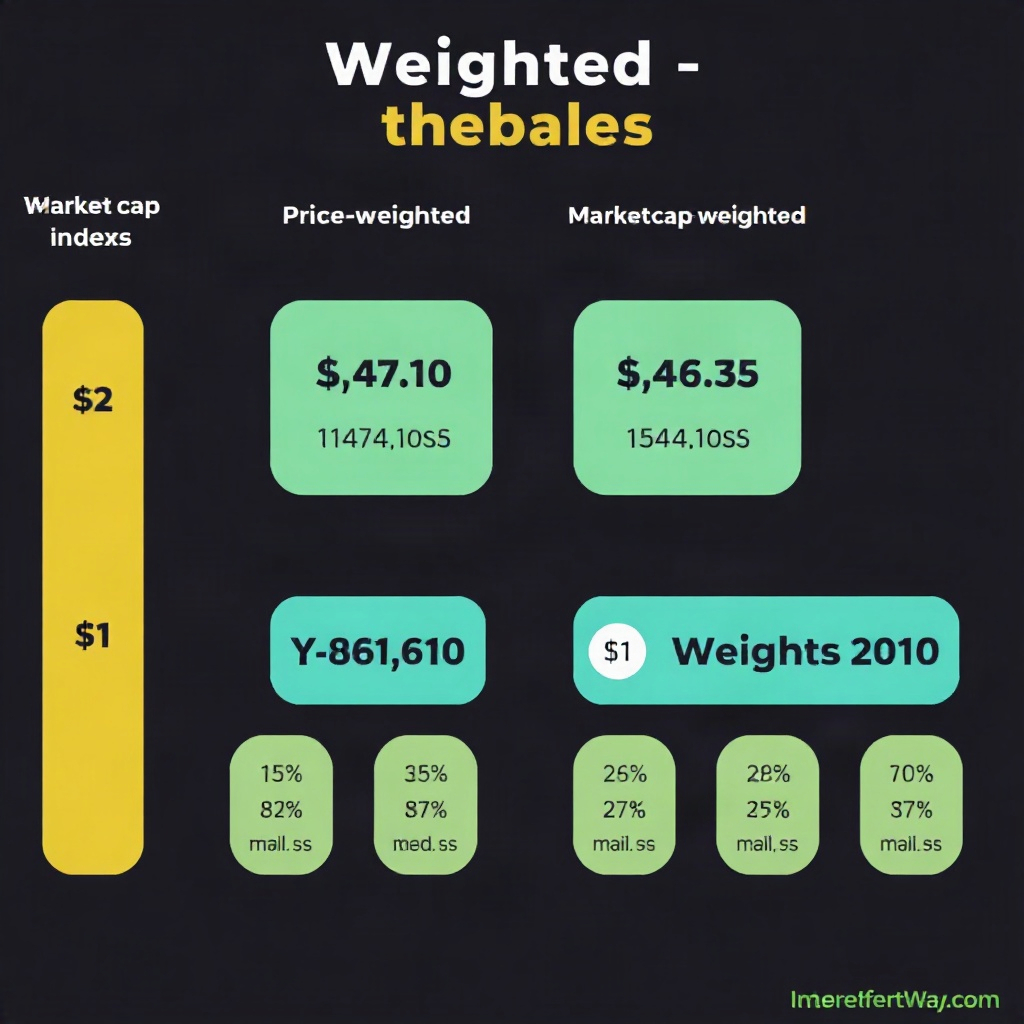
Price-weighted indexes calculate the average stock price of the companies included in the index. This means that stocks with higher prices will have a greater impact on the index value compared to stocks with lower prices. The most well-known price-weighted index is the Dow Jones Industrial Average (DJIA), which consists of 30 large publicly traded companies in the United States.
Investors should be aware that price-weighted indexes can be heavily influenced by the stock price movements of high-priced companies. As a result, the performance of the overall index may not accurately reflect the performance of the broader market.
Market-Cap-Weighted Indexes
On the other hand, market-cap-weighted indexes take into account the market capitalization of each company in the index. Market capitalization is calculated by multiplying the number of outstanding shares by the current stock price. This method gives higher weights to companies with larger market capitalizations, making them more significant in the index.
The S&P 500, which includes 500 large-cap U.S. stocks, is a well-known example of a market-cap-weighted index. Investors should note that market-cap-weighted indexes are more representative of the overall market performance, as they reflect the relative size of companies in the index.
Key Differences Between Price-Weighted and Market-Cap-Weighted Indexes
One of the main differences between price-weighted and market-cap-weighted indexes is the methodology used to calculate the index value. While price-weighted indexes focus on stock prices, market-cap-weighted indexes prioritize the market capitalization of companies. This results in different weightings for individual stocks within the index.
Another important distinction is the impact of stock splits on the index value. In price-weighted indexes, a stock split can significantly alter the index value, as it changes the price of the stock. In contrast, market-cap-weighted indexes are less affected by stock splits, as the market capitalization remains the same.
Investors should also consider the sectoral composition of price-weighted and market-cap-weighted indexes. Price-weighted indexes may be skewed towards certain sectors with high-priced stocks, while market-cap-weighted indexes provide a more balanced representation of the market.
Conclusion
In conclusion, understanding the differences between price-weighted and market-cap-weighted indexes is essential for investors looking to make informed decisions. While price-weighted indexes may be more influenced by the movements of high-priced stocks, market-cap-weighted indexes offer a more comprehensive view of the market. By considering these factors, investors can choose the index that best aligns with their investment goals and strategies.