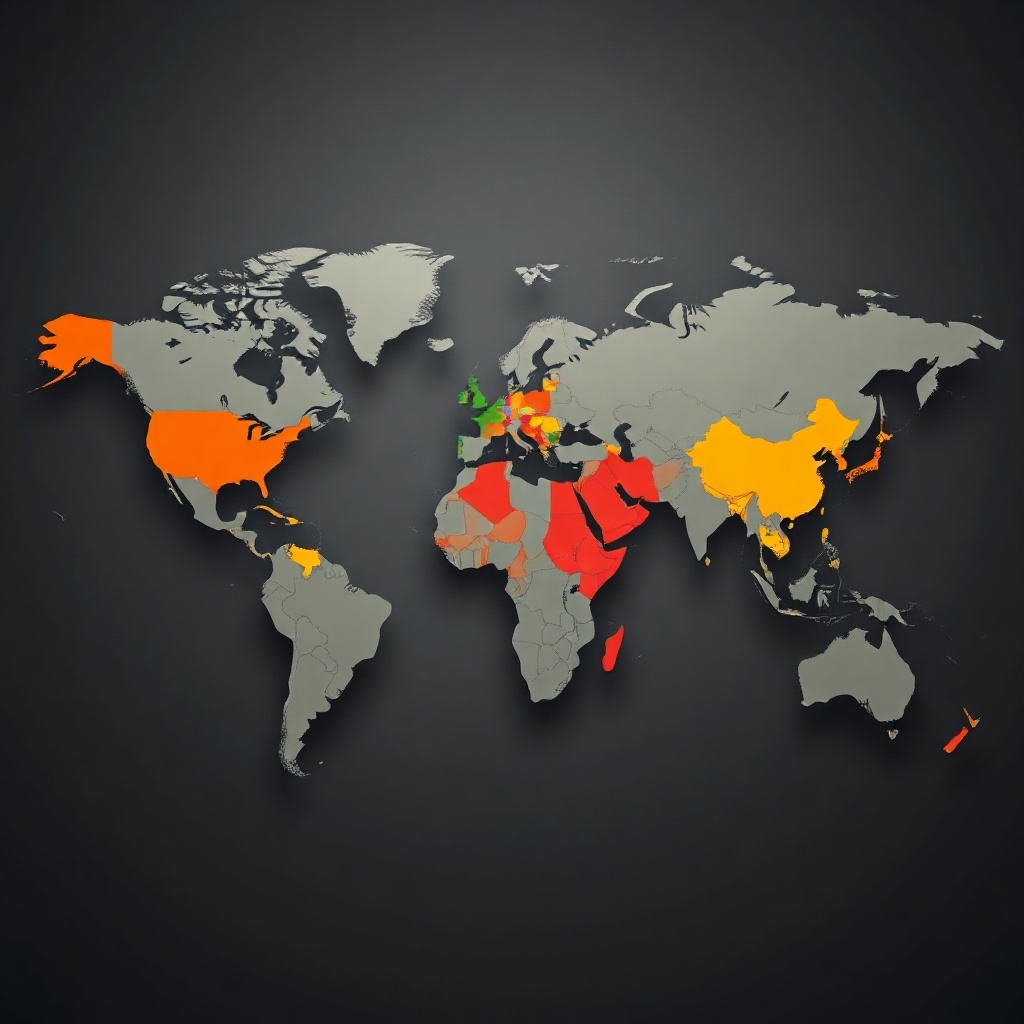
In the contemporary international landscape, small states are increasingly faced with the complex dynamics of great-power competition. These nations, often with limited resources and influence, must navigate a world dominated by larger powers while striving to maintain their sovereignty and security. As great powers engage in strategic rivalry, small states find themselves at a crossroads where their foreign policies are crucial. This article will explore how small states maneuver through these geopolitical challenges, the strategies they employ, and the implications of their actions in the broader context of international relations.
The Strategic Importance of Small States in Global Politics
Small states, often overlooked in the grand narratives of international relations, play a pivotal role in the geopolitical landscape. Their geographical locations, resource endowments, and historical contexts can significantly influence regional stability and global power dynamics. In many cases, small states serve as buffers or gateways between larger powers, making their political alignments critical. For instance, countries situated between rival great powers may leverage their unique positions to gain diplomatic advantages or economic benefits. Moreover, small states often engage in multilateral organizations, utilizing platforms like the United Nations or regional blocs to amplify their voices and influence policies that affect their interests. Through strategic diplomacy, these nations can forge coalitions and alliances that enhance their bargaining power, demonstrating that even the smallest actors in the international arena can significantly shape outcomes.
Strategies Employed by Small States in Balancing Great Powers
To effectively navigate the turbulent waters of great-power competition, small states employ a variety of strategies that reflect their unique circumstances and goals. One prevalent approach is bandwagoning, where smaller nations align themselves with a more powerful state to gain security assurances or economic advantages. This strategy, while potentially beneficial in the short term, can expose small states to risks, including loss of autonomy and increased vulnerability to the whims of their powerful partners. Alternatively, some small states may opt for balancing, wherein they seek to counterbalance the influence of dominant powers by forming coalitions with other states or engaging in military alliances. This strategy aims to deter aggression and secure a measure of independence. Additionally, small states often invest in soft power, leveraging cultural diplomacy, humanitarian initiatives, and economic partnerships to project influence and foster goodwill among larger powers and the international community.
The Role of Economic Diplomacy in Enhancing Security
Economic diplomacy has emerged as a critical tool for small states striving to enhance their security and international standing. By cultivating robust trade relationships and attracting foreign investment, these nations can bolster their economies, which in turn strengthens their bargaining position on the global stage. For instance, small states that become hubs for trade or finance attract attention from great powers eager to access lucrative markets. This economic interdependence can serve as a deterrent against aggression, as larger states may hesitate to jeopardize valuable economic ties. Furthermore, small states often engage in strategic economic partnerships that allow them to diversify their trade relations, reducing reliance on any single partner and enhancing their resilience against external pressures. Through effective economic diplomacy, small states can not only secure their immediate interests but also contribute to regional stability and economic development.
The Impact of International Norms and Institutions on Small States
In a world characterized by great-power competition, international norms and institutions play an essential role in shaping the behavior of states, including small nations. These frameworks provide a set of rules and expectations that govern state interactions, offering small states tools to assert their interests and protect their sovereignty. For example, international law offers small states avenues for dispute resolution and mechanisms for holding larger powers accountable for their actions. Additionally, small states often benefit from various treaties and agreements that promote cooperation on issues such as trade, environmental protection, and human rights. By adhering to these norms, small states can enhance their legitimacy and gain support from the international community, which can be particularly valuable in times of crisis. Consequently, small states that effectively engage with international institutions are better positioned to navigate the challenges posed by great-power competition.
Case Studies Small States Successfully Navigating Great-Power Competition
Examining specific case studies of small states reveals the diverse strategies that these nations can employ in the face of great-power competition. For instance, Singapore has successfully positioned itself as a global trade hub, leveraging its strategic location and robust economic policies to attract foreign investment and foster regional cooperation. By maintaining a neutral stance and engaging in strategic partnerships with both Western and Asian powers, Singapore has effectively navigated the complexities of great-power rivalries. Similarly, the Baltic States—Estonia, Latvia, and Lithuania—have utilized their membership in NATO and the European Union to bolster their security against Russian aggression. By integrating into Western political and economic structures, these small states have enhanced their resilience and deterred potential threats. Such examples illustrate that with the right strategies and alliances, small states can not only survive but thrive in a competitive international environment.
Future Prospects for Small States in a Shifting Geopolitical Landscape
As the global geopolitical landscape continues to evolve, small states will face both challenges and opportunities in navigating great-power competition. The rise of emerging powers and shifting alliances may create new avenues for small states to assert their interests and enhance their security. However, they must remain vigilant against the potential pitfalls of increased competition among great powers, which could lead to instability in their regions. Adapting their strategies to the changing dynamics of international relations will be essential for small states seeking to maintain their sovereignty and agency. Furthermore, fostering regional cooperation and engaging with multilateral institutions will remain pivotal for small states aiming to amplify their voices and influence in an increasingly complex world. Ultimately, the ability of small states to navigate these challenges will be a testament to their resilience and strategic acumen in the face of great-power competition.