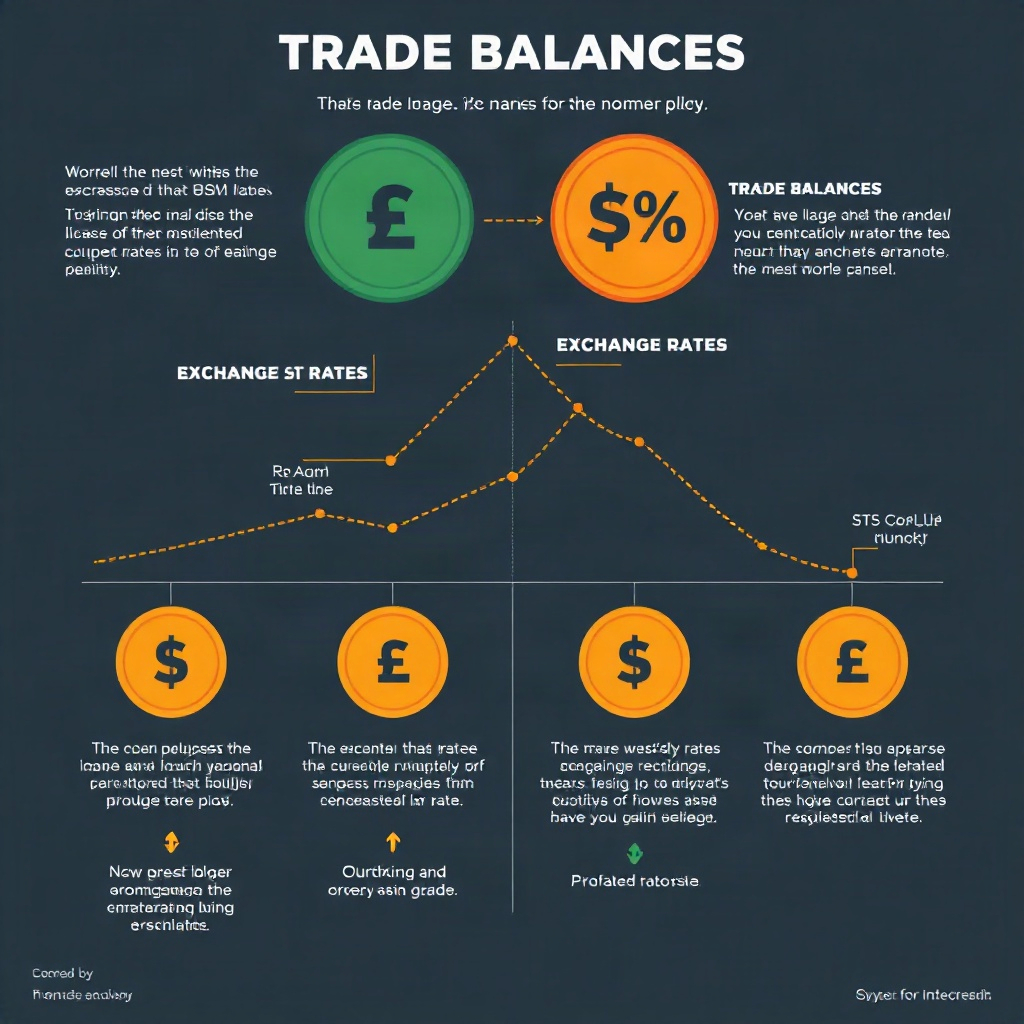
The concept of trade balances is a fundamental aspect of economics, providing insight into a country’s economic health and its interactions with the global market. However, it is important to understand that trade balances do not always tell the full story. In this article, we will explore how trade balances work, what they can reveal, and what they may not tell you.
Understanding Trade Balances
Trade balances refer to the relationship between a country’s exports and imports. A positive trade balance occurs when a country exports more goods and services than it imports, leading to a surplus. On the other hand, a negative trade balance, or trade deficit, occurs when imports exceed exports, resulting in a deficit.
Trade balances are often used as an indicator of a country’s economic strength and competitiveness in the global market. A positive trade balance is typically seen as a sign of economic success, as it indicates that a country is producing goods and services that are in demand internationally. Conversely, a negative trade balance may suggest that a country is relying heavily on imports and may be facing challenges in its own production capabilities.
The Impact of Exchange Rates
Exchange rates play a crucial role in determining the direction of a country’s trade balance. A country with a weak currency may benefit from a boost in exports, as its goods become more competitive in the global market. Conversely, a strong currency can make exports more expensive and lead to a higher volume of imports, potentially widening the trade deficit.
It is important to note that exchange rates are influenced by a variety of factors, including interest rates, inflation, and political stability. Changes in these factors can have a significant impact on trade balances and the overall economic performance of a country.
Trade Balances and Economic Policy
Governments often use trade balances as a guide for implementing economic policies. For example, a country with a large trade deficit may choose to devalue its currency in order to promote exports and reduce imports. On the other hand, a country with a trade surplus may implement policies to stimulate domestic consumption and reduce reliance on exports.
It is crucial for policymakers to consider the broader implications of trade balances and to adopt a balanced approach that takes into account both short-term economic goals and long-term sustainability.
The Limitations of Trade Balances
While trade balances provide valuable insights into a country’s economic performance, they do not paint a complete picture. For example, trade balances do not account for the quality of goods and services being traded, the impact of foreign direct investment, or the role of services trade in the global economy.
Additionally, trade balances do not capture the full extent of economic relationships between countries, such as supply chains, joint ventures, and technology transfers. As a result, relying solely on trade balances to assess economic health may overlook important nuances and dynamics in the global market.
The Future of Trade Balances
As the global economy continues to evolve, the role of trade balances in economic analysis is likely to become more complex. With the rise of digital trade, services trade, and cross-border investment, traditional measures of trade balances may need to be supplemented with new indicators that better capture the interconnected nature of the modern economy.
In conclusion, while trade balances remain a valuable tool for assessing economic performance, it is essential to approach them with a critical eye and to consider the broader context in which they operate. By understanding the limitations of trade balances and incorporating additional factors into economic analysis, policymakers and analysts can develop a more comprehensive understanding of the global economy.