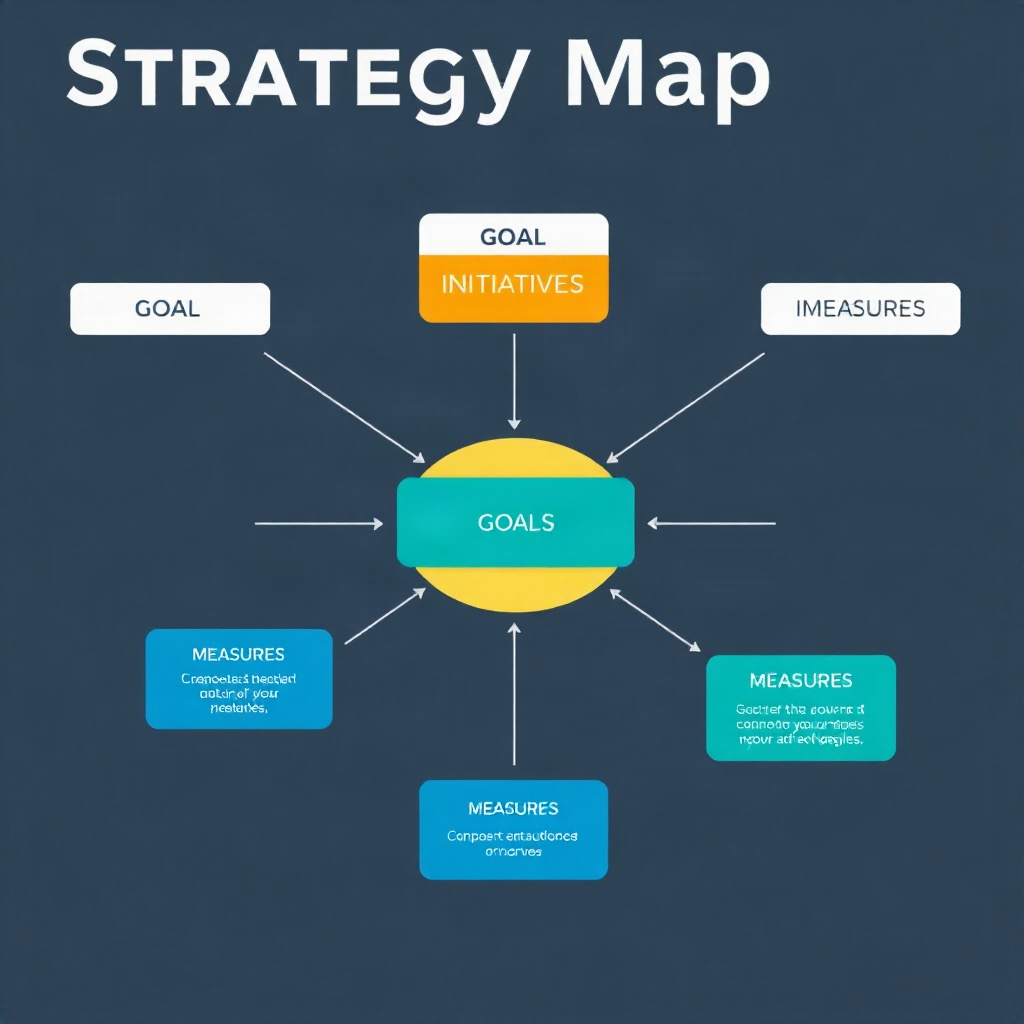
In today’s fast-paced business environment, organizations are constantly striving to align their goals with their overall strategy. The Strategy Map is a powerful tool that helps connect the dots between organizational goals, initiatives, and measures. By visualizing these connections, businesses can better understand how each component contributes to the overall success of the organization.
Understanding the Strategy Map
The Strategy Map is a visual representation of an organization’s strategy, showing the cause-and-effect relationships between different strategic objectives. It helps organizations translate their vision into actionable steps by highlighting the key drivers of success. By breaking down the strategy into manageable components, the Strategy Map provides a clear roadmap for achieving organizational goals.
Components of a Strategy Map
A typical Strategy Map consists of four key components: financial, customer, internal processes, and learning and growth perspectives. Each perspective represents a different aspect of the organization’s strategy and is linked to specific objectives and initiatives. By including all four perspectives in the Strategy Map, organizations can ensure a holistic approach to strategy execution.
Aligning Goals with Initiatives
One of the main purposes of the Strategy Map is to align organizational goals with specific initiatives. By clearly defining the desired outcomes and the actions required to achieve them, organizations can ensure that their resources are focused on the most critical areas. This alignment is essential for driving performance and fostering a culture of accountability within the organization.
Measuring Success
Measuring the progress towards achieving organizational goals is a crucial aspect of the Strategy Map. By defining key performance indicators (KPIs) and establishing clear metrics for success, organizations can track their performance and make data-driven decisions. The Strategy Map helps organizations identify areas of improvement and adjust their strategies accordingly to drive continuous improvement.
Implementing the Strategy Map
Implementing a Strategy Map requires strong leadership, effective communication, and a commitment to change. Organizations must engage all levels of the organization in the strategic planning process and ensure that everyone understands their role in achieving the organization’s goals. By creating a shared vision and fostering collaboration, organizations can successfully implement the Strategy Map and drive sustainable growth.
Overcoming Challenges
While the Strategy Map is a valuable tool for strategic planning, organizations may face challenges in its implementation. Common challenges include resistance to change, lack of alignment between goals and initiatives, and difficulties in measuring intangible outcomes. By addressing these challenges head-on and continuously refining the Strategy Map, organizations can overcome obstacles and achieve long-term success.
Conclusion
The Strategy Map is a powerful tool that helps organizations connect their goals, initiatives, and measures in a cohesive framework. By visualizing the cause-and-effect relationships between different components of the strategy, organizations can drive performance, foster accountability, and achieve sustainable growth. Embracing the Strategy Map as a guiding framework for strategic planning can help organizations navigate today’s complex business landscape and achieve their long-term objectives.