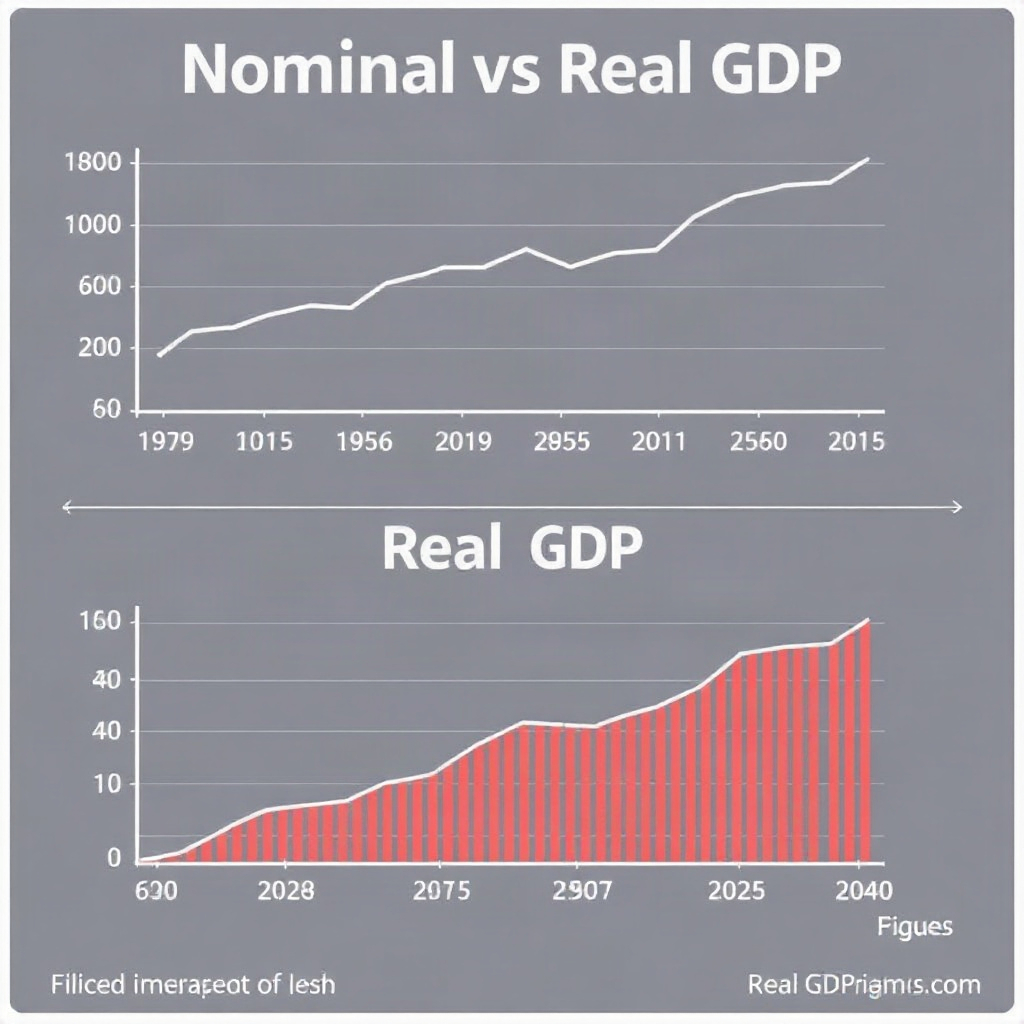
Nominal GDP measures a country’s economic output using current prices without adjusting for inflation. On the other hand, Real GDP takes into account inflation and adjusts for changes in price levels, providing a more accurate reflection of an economy’s growth. Understanding the differences between these two measures is crucial for policymakers, economists, and investors to make informed decisions. In this analysis, we will delve into the concepts of Nominal vs Real GDP, exploring how to separate price changes from actual economic growth.
The Basics of GDP
Gross Domestic Product (GDP) is a key economic indicator that measures the total value of all goods and services produced within a country’s borders in a specific period. It serves as a barometer of a nation’s economic health and is used to assess the overall performance of an economy. GDP can be calculated in two ways: Nominal GDP and Real GDP.
Nominal GDP The Current Picture
Nominal GDP represents the total economic output of a country using current market prices. It does not take inflation into account, which means that changes in Nominal GDP can be influenced by shifts in price levels rather than actual changes in production. While Nominal GDP provides a snapshot of a country’s economic performance, it may not accurately reflect real growth due to the impact of inflation.
Real GDP Stripping Away Price Changes
Real GDP adjusts Nominal GDP for the effects of inflation or deflation, providing a more accurate measure of an economy’s output. By removing the impact of price changes, Real GDP allows for a clearer comparison of economic performance over time. This adjustment is crucial for policymakers to understand the true underlying growth trends and make informed decisions about economic policies.
Calculating Real GDP
To calculate Real GDP, economists use a base year as a reference point to remove the effects of price changes. By applying a price index, such as the Consumer Price Index (CPI) or the GDP deflator, to adjust Nominal GDP figures, economists can derive the real value of goods and services produced in an economy. This adjusted figure provides a more accurate representation of economic growth, free from the distortion caused by inflation.
Interpreting the Difference
The difference between Nominal and Real GDP can reveal important insights about an economy’s performance. A positive gap indicates that the economy is growing faster than the rate of inflation, while a negative difference suggests that real output is lagging behind due to price increases. Understanding this distinction is essential for policymakers to formulate effective monetary and fiscal policies to support sustainable economic growth.
Conclusion Balancing Price Changes and Growth
In conclusion, the differentiation between Nominal and Real GDP is crucial for assessing the true economic performance of a country. While Nominal GDP provides a snapshot of current market values, Real GDP offers a more accurate reflection of actual output by adjusting for inflation. By understanding how to separate price changes from growth, policymakers and economists can make informed decisions to support long-term economic stability and prosperity.